
Honest Surface Assessment
Every area is judged on whether coating will genuinely help. Where the answer is no, you get told that rather than sold a finish that looks right for one season.
Serving Los Angeles, California & surrounding areas
Mon–Fri 8am–6pm Sat 9am–2pm
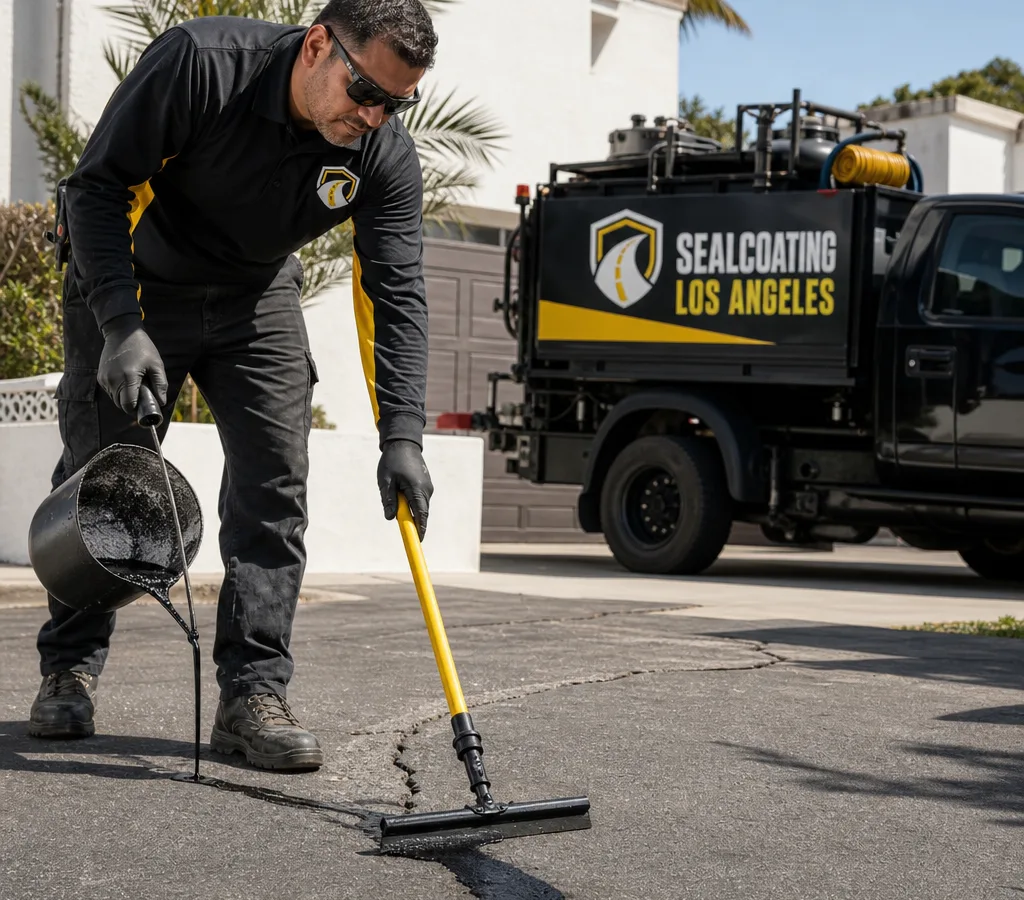
Years of hard sun leave asphalt gray, chalky, and shedding aggregate. The honest question is what a coating can still protect and what has gone past that point.
Asphalt that has spent years under constant sun loses the binder holding its aggregate together. The surface fades toward gray, takes on a dry chalky feel, and eventually starts shedding stone, which is the stage where people usually call someone.
At that point there are two genuinely different situations, and they look similar from a distance. One is a surface that has lost its finish but is otherwise sound, where sealcoat restores protection and stops the decline. The other is a surface that has lost structure, where a coating is cosmetic and the problem continues underneath it.
Telling those apart is the most useful thing we do on a walkthrough here. It is also where it is easiest to oversell, so we would rather point at the areas that need real repair and say plainly that a coating is not the answer for them.
Reading a sun-worn surface takes more than looking at the color. Gray asphalt can be perfectly sound, and asphalt that looks acceptable can be failing beneath.
We go through the surface area by area, because one lot often contains both conditions and they should not be quoted as though they were the same.
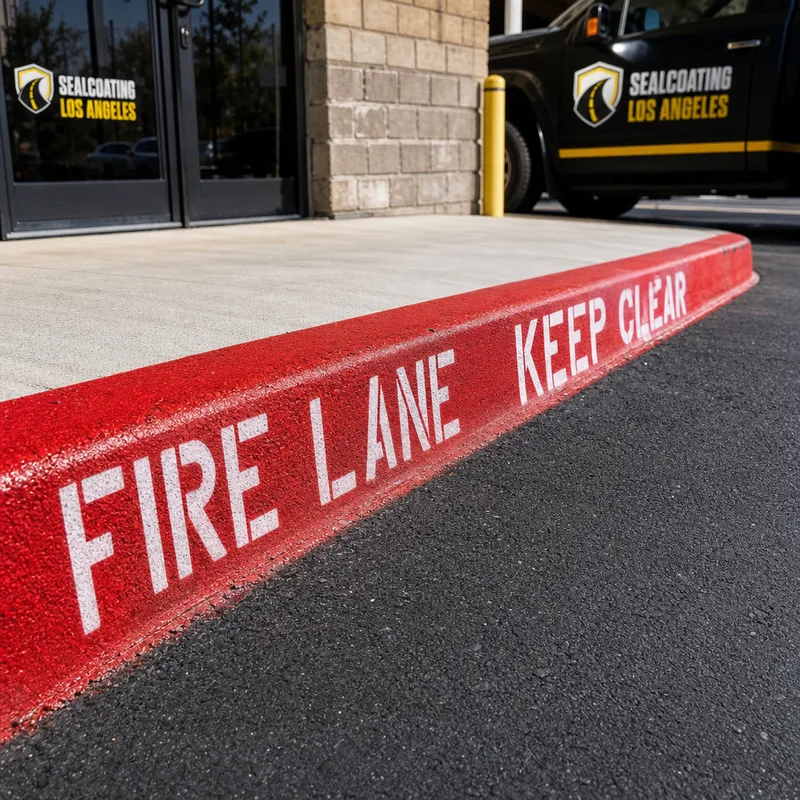
The work splits into protecting what is sound and being clear about what is not, then keeping the property usable while it happens.
Every area is judged on whether coating will genuinely help. Where the answer is no, you get told that rather than sold a finish that looks right for one season.
A raveling surface has to be cleared of everything no longer bonded. Sealer applied over loose stone bonds to the stone, not the pavement, and lifts away with it.
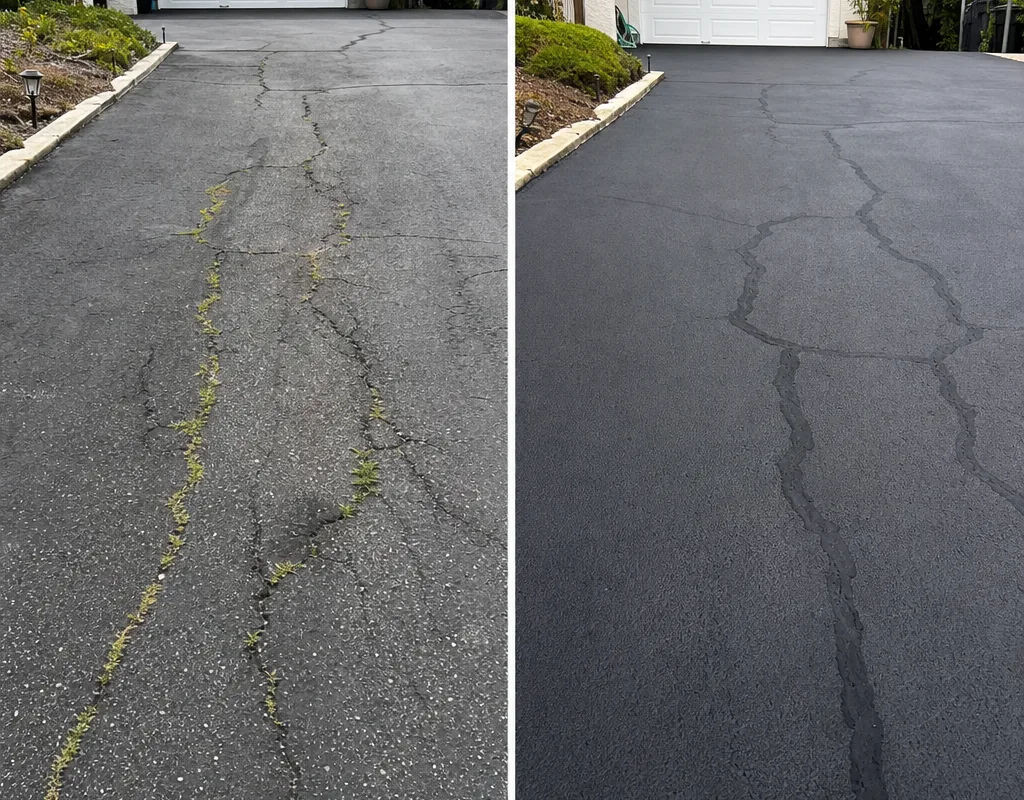
Failed sections are patched first where repair is the right call. Coating is applied to protect sound asphalt, not to disguise asphalt that has already given up.
On sound but oxidized pavement a proper coat puts the barrier back against sun and water, which is what slows further drying of the binder underneath.
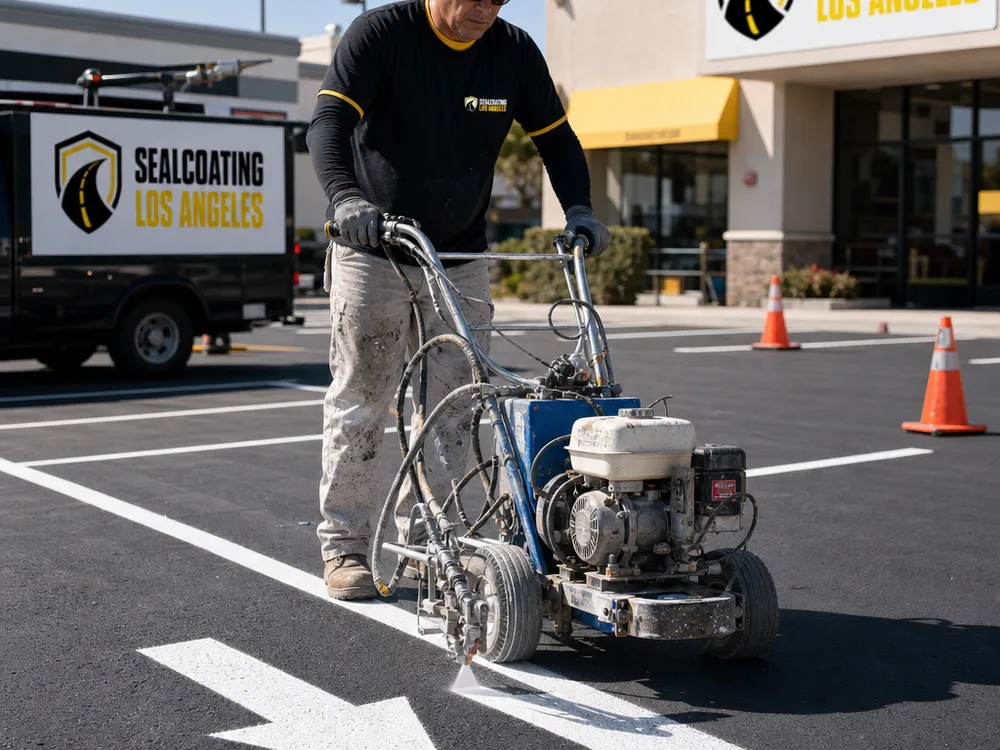
Larger properties are worked in sections so parking stays available. The sequence is agreed beforehand and marked clearly on the day.
We divide the area into what is sound, what is marginal, and what has failed, then quote each honestly rather than averaging across the whole surface.
Before scheduling we settle which sections get patched and which get protected, so there are no surprises midway through the work.
Everything no longer bonded comes off. This is slower on a raveling surface and it is the only way a coating can reach solid pavement.
Structural repairs are completed and allowed to settle before any protective work begins over the surrounding area.
The sound surface is coated section by section, keeping part of the property open and giving each area its full cure window.
The honest answer depends on how much of the surface still qualifies for coating. Protection on sound pavement runs about $0.20 to $0.35 per square foot, and $0.55 to $0.85 per square foot where the surface needs substantial cleaning and preparation first. Residential driveways typically fall between $250 and $600, or $700 to $900 for larger ones.
Where sections have failed structurally, that is repair and it is priced on its own: patching from about $2,500, larger scopes $3,000 to $6,000 and beyond, and major reconstruction $12,000 or more. We would rather show you that split clearly after a walkthrough than quote one blended figure that hides it.
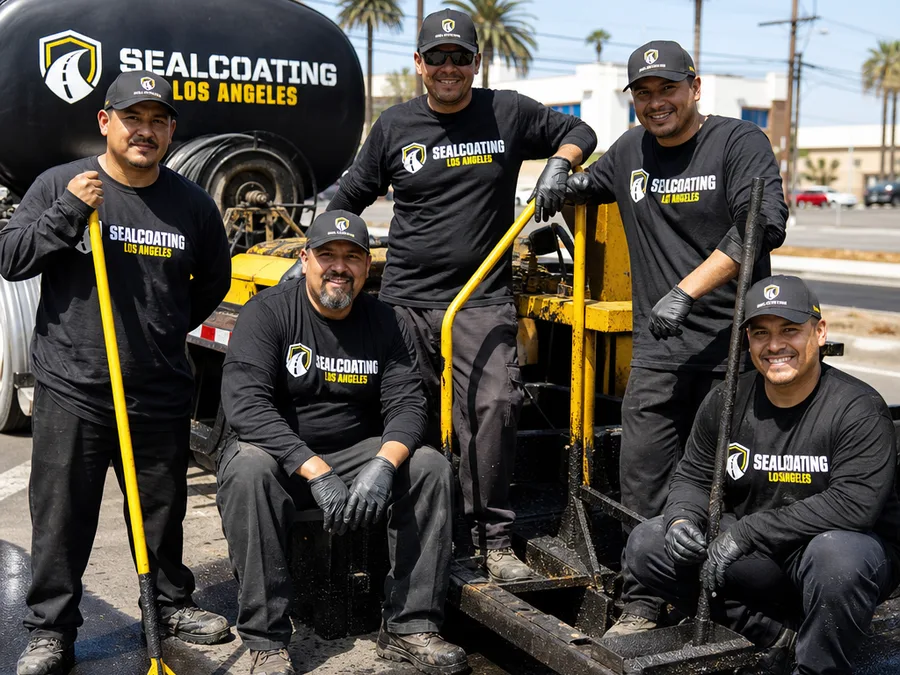
Book Your Free InspectionWeathered pavement alongside completed work, plus the patching and staging that larger properties usually need.
What owners ask when a lot has gone gray and they are deciding between coating it and replacing it.
Often, yes. Gray and chalky usually means the surface binder has oxidized, and if the mat underneath is still sound, cleaning and coating restores protection and slows further decline. What determines the answer is not the color but whether the pavement still holds together. That is what a walkthrough establishes.
It means the binder holding the aggregate has deteriorated enough that stone is coming loose from the surface. A small amount of scatter is manageable and can be cleaned and coated. A surface giving up stone freely has usually gone further than a coating can address, and treating it as a protection job would be misleading.
By looking at whether the problem is at the surface or in the structure. Oxidation, fading, and light scatter are surface conditions that protection helps. Interconnected cracking, soft areas, and sections moving under load are structural, and no coating adds strength. Most larger lots have both, which is why we zone them rather than quote one rate.
Yes, and on a mixed-condition surface that is frequently the sensible plan. Protecting the sound areas while repairing the failed ones puts the money where it does something. We will mark out the zones at the walkthrough so you can see exactly what is being treated which way.
Phasing. We close one section at a time, mark the route clearly, and reopen as each area finishes curing. Tell us your busiest periods and which spaces matter most and the sequence gets built around that rather than around what is quickest for us.
It will restore an even dark surface and a clean finish, and on sound pavement that is a genuine improvement rather than only a cosmetic one. It will not disguise sunken areas, patched sections, or cracking that is still moving. If your expectation is a surface that looks newly laid, replacement is the honest comparison and we will say so.
Not sure whether your lot needs protecting or repairing? A walkthrough separates the two before you commit to either.
Book Your Free InspectionTell us the approximate size, how old the surface is, and whether you are seeing loose stone or cracking. We will zone it by condition, quote repair and coating separately, and put the split in writing.
Request a quote
Send the surface, its size, and what you are seeing. We reply with next steps and a time for a walkthrough.