
Measured Coverage Rate
Material is planned against measured area, not guessed. That is what keeps the middle of a wide apron from reading lighter or heavier than its edges once the surface dries.
Serving Los Angeles, California & surrounding areas
Mon–Fri 8am–6pm Sat 9am–2pm

Broad driveways and shared drive aisles show every inconsistency in a coat. We plan coverage, control the overlap between passes, and cut the edges in by hand.
A narrow strip of asphalt forgives a lot. A wide apron does not, because the eye reads the whole surface at once and any variation in how much material went down becomes a visible band running across it. That is the problem worth solving on residential work out here.
Getting it right is mostly about rate and rhythm. The amount of sealer per square foot has to stay consistent across a surface with no curb or planter to break it up, and each pass has to meet the one beside it while the material is still open enough to blend.
The second half is the edges. Garage thresholds, sidewalk transitions, and the point where a driveway meets a street all need to be cut in cleanly, because a wandering line at the boundary undoes a finish that is otherwise even.
The walkthrough on a large residential surface is mostly measurement and access. We need to know how much area there is, how it drains, and how people will get in and out while it cures.
Shared drive aisles add a scheduling problem that a single driveway does not have, and that is worth settling before any date is set.
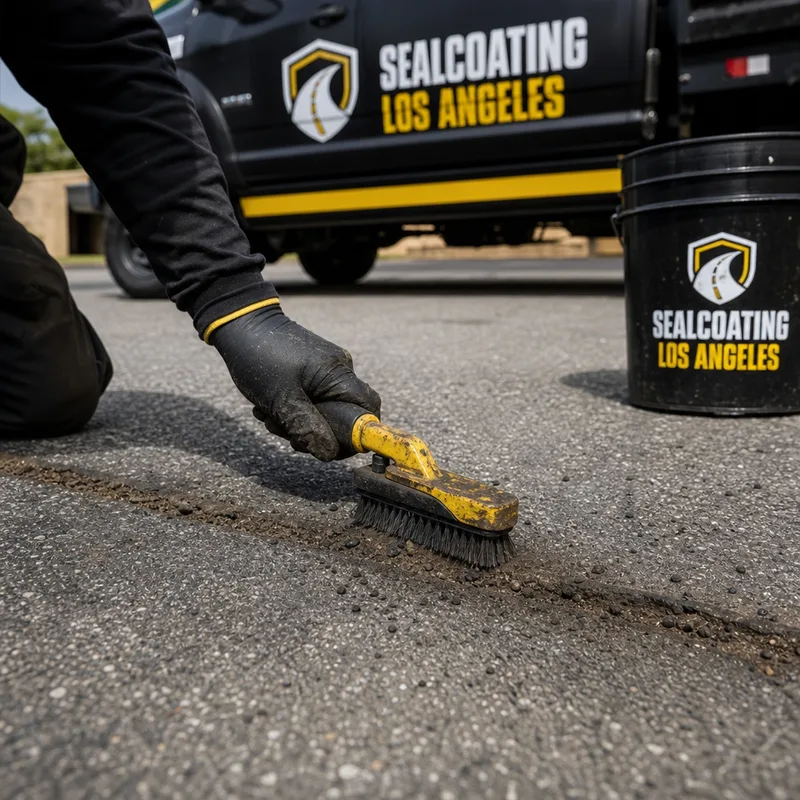
Everything here is aimed at an even finish across a large surface and a clean boundary where that surface ends.
Material is planned against measured area, not guessed. That is what keeps the middle of a wide apron from reading lighter or heavier than its edges once the surface dries.
Each pass is set to meet the previous one while it is still workable. Banding on a broad driveway almost always traces back to passes that were laid too far apart in time.
Garage edges, walkways, and concrete joints are cut by hand. It is slower than running equipment to the boundary and it is the difference between a crisp line and a smeared one.
Concrete, pavers, and landscaping along the edge get protected before anything is applied, so the finished job does not come with marks on surfaces nobody asked us to coat.
On shared aisles we phase the work so vehicles can still move. The plan is agreed before the day rather than improvised once the first section is wet.
We measure the surface, work out the material needed, and decide the direction and sequence of passes before any date is confirmed.
Debris, dirt, and loose material come off completely. On a wide apron any missed patch becomes an obvious flaw once the coating goes over it.
Thresholds, joints, and adjacent concrete are masked and the boundary lines cut in first, so the body of the driveway can be worked without chasing the edges.
The surface is coated in the planned sequence, each pass meeting the last while still open. This is where an even finish is won or lost.
We set barriers, confirm where vehicles should go, and give you the window before normal use resumes.
Most residential driveways fall between $250 and $600. The broader multi-car aprons common out here more often land around $700 to $900, simply because there is more area to cover and more edge to cut in by hand.
Shared drive aisles and larger paved areas are priced by the square foot instead, typically $0.20 to $0.35, rising toward $0.55 to $0.85 where prep is substantial. Crack filling, where it is needed first, often runs $350 to $1,500 depending on how much there is. We confirm the number after measuring, not before.
Book Your Free InspectionExamples of finished surfaces, the transitions where a coat meets concrete, and how a site is set up while the asphalt cures.
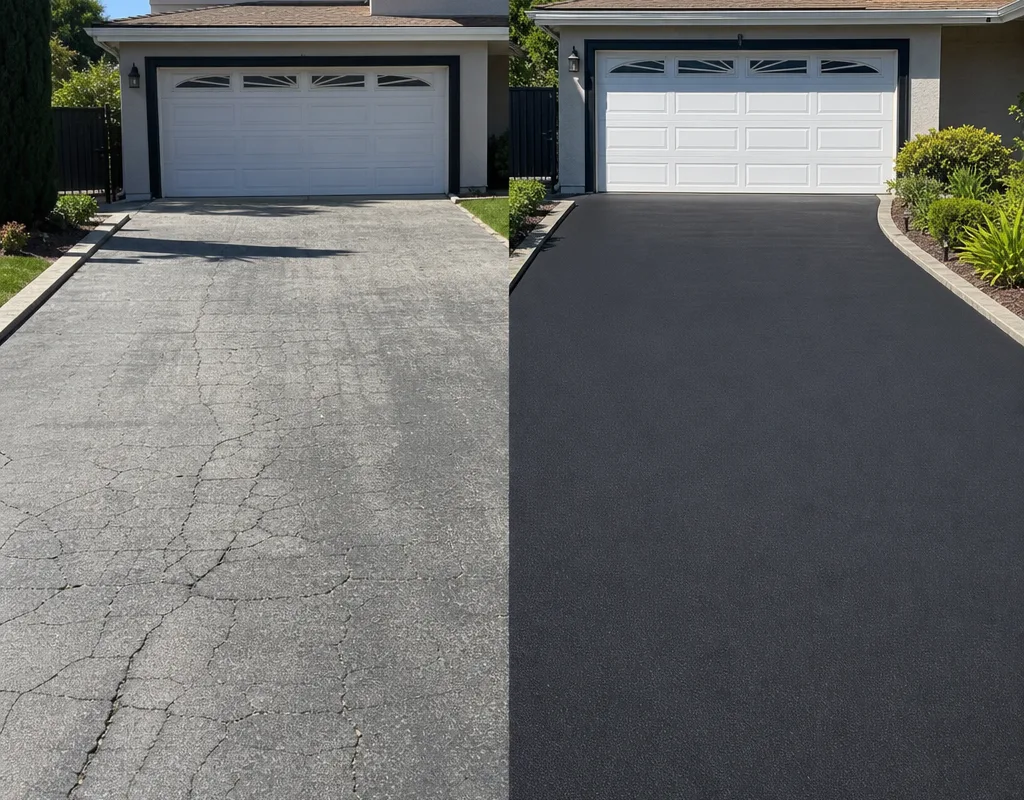
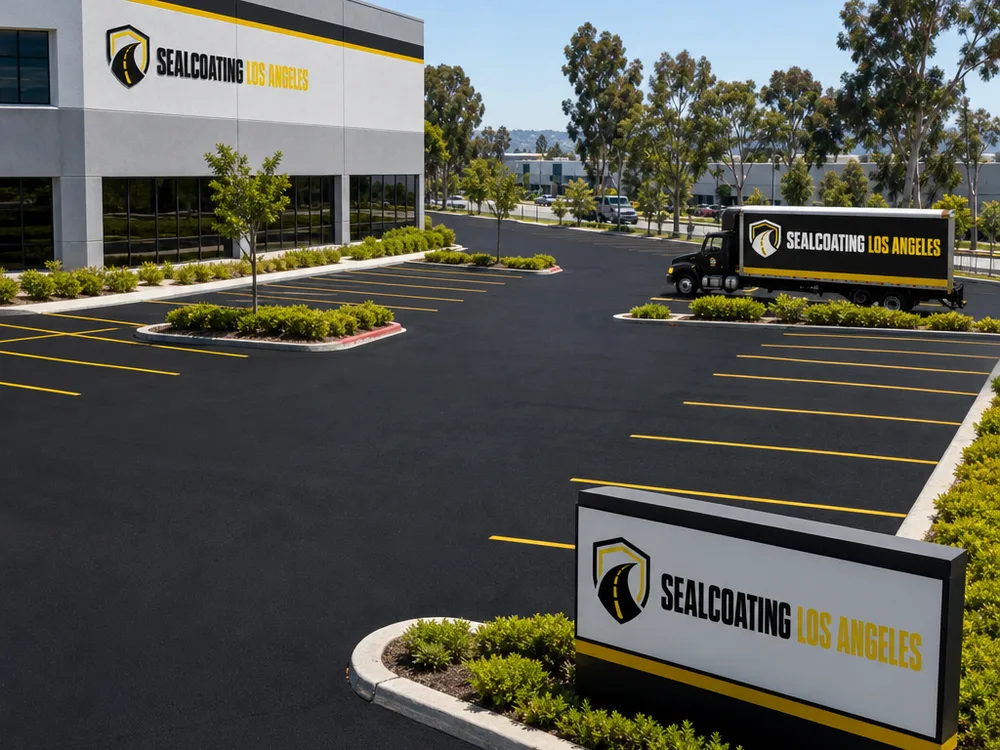
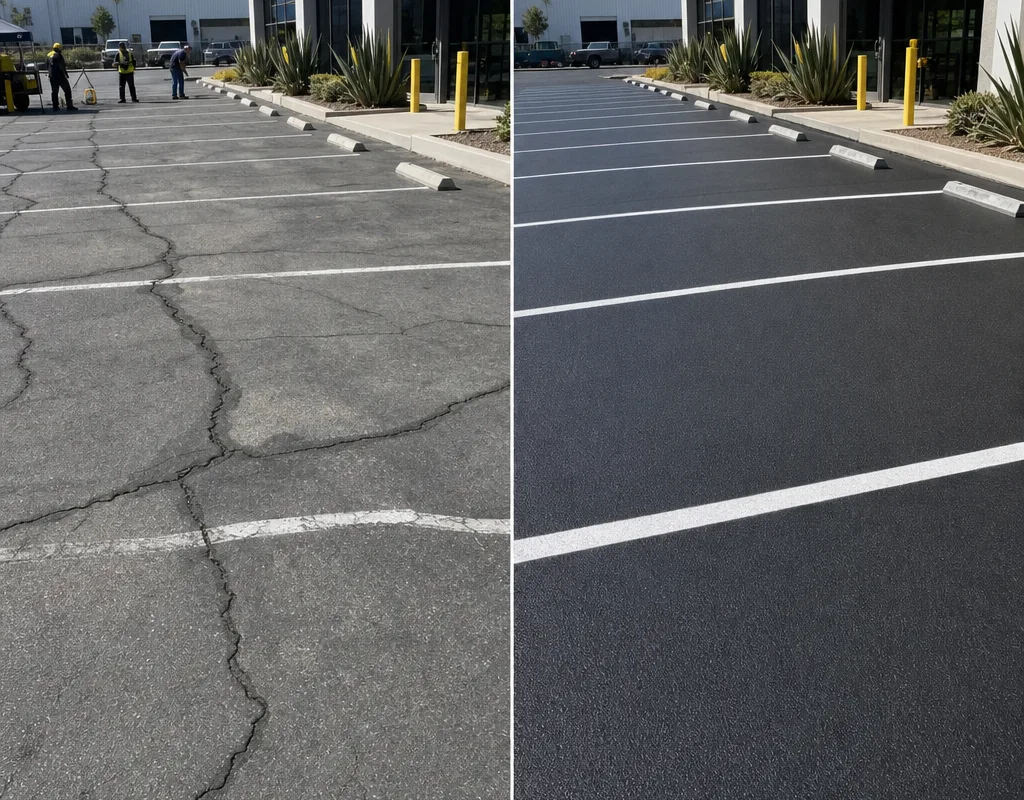
What homeowners and HOA managers ask us most often about coating a large residential surface.
That banding is a coverage problem. It happens when passes go down at different rates, or when one pass has started to set before the next one meets it. On a wide, uninterrupted surface there is nothing to hide the join, so the fix is planning the sequence and keeping the material consistent rather than correcting it afterward.
Long enough for the coating to cure properly, which depends on temperature, humidity, and air movement on the day. Foot traffic returns before vehicles do. We give you a specific window at the walkthrough and mark the surface, because driving on a coat that is not ready leaves marks that stay.
Yes, and it is worth raising early. Where a driveway or aisle is the only access, we phase the work so part stays usable, or agree a window that fits around when vehicles need to move. What we want to avoid is discovering the constraint on the morning of the job.
That is what the masking and hand cut-in are for. Adjacent concrete, pavers, and walkways are protected before anything is applied and the boundary lines are cut by hand. It takes longer than running equipment up to the edge, and it is the part people notice most once the job is done.
The coating is similar, but the planning is not. A shared aisle carries more vehicles, usually cannot close completely, and involves more people who need to be told what is happening and when. We scope those as phased work with access maintained rather than as a single closure.
Cracks get addressed before coating. Sealcoat is a protective layer and will not bridge a moving crack, so filling and sealing comes first. If an area has broken up structurally rather than simply cracked, we will tell you that patching is the honest answer and not sell a coating as the fix.
Planning a driveway or drive aisle this season? A measured walkthrough is what keeps coverage even across the whole surface.
Book Your Free InspectionSend us the approximate size, whether it is a single property or a shared aisle, and how access works day to day. We will measure, confirm the coverage plan and edge work, and give you a written scope.
Request a quote
Send the surface, its size, and what you are seeing. We reply with next steps and a time for a walkthrough.